Products · Portable
Portable power distribution units
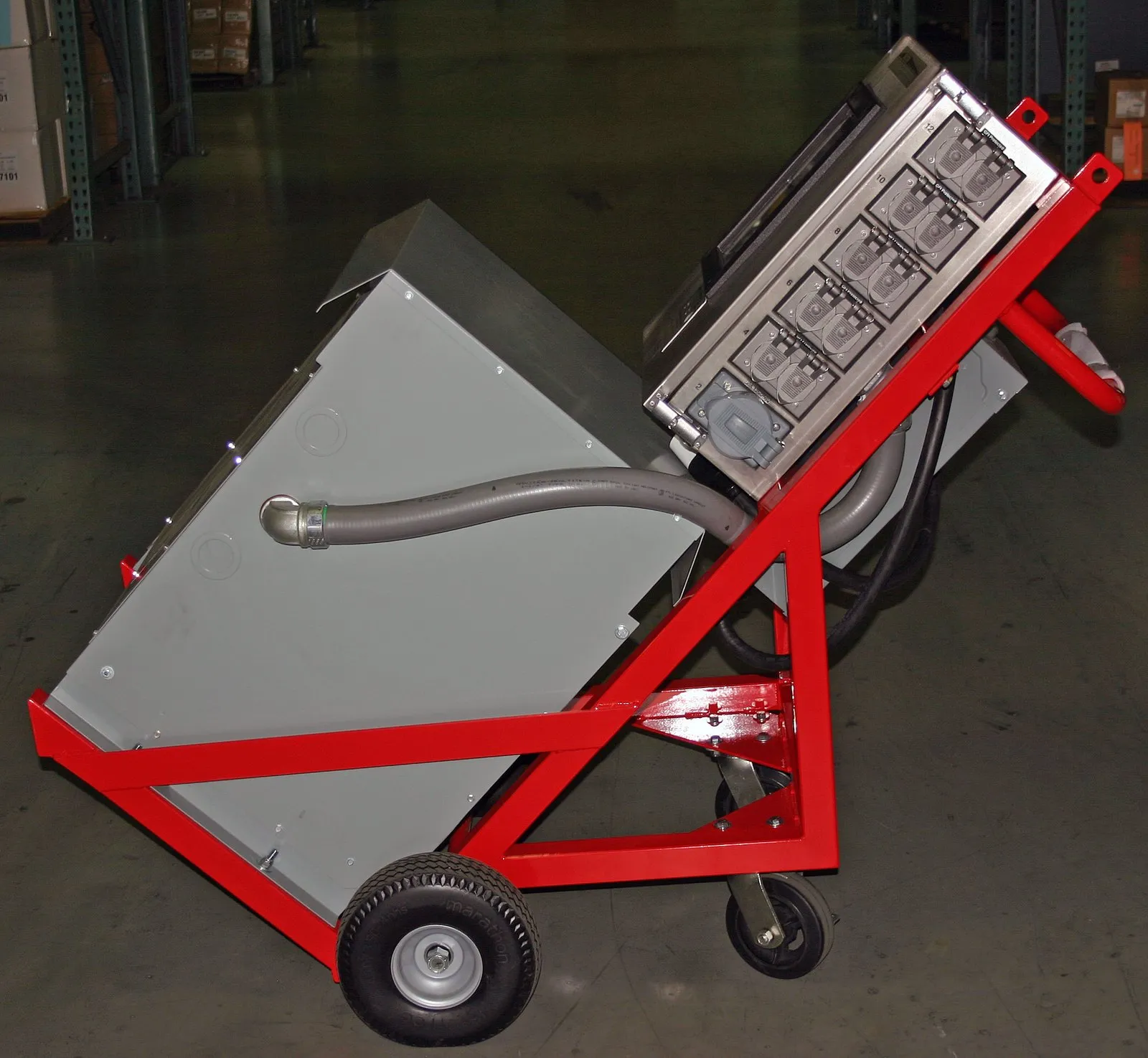
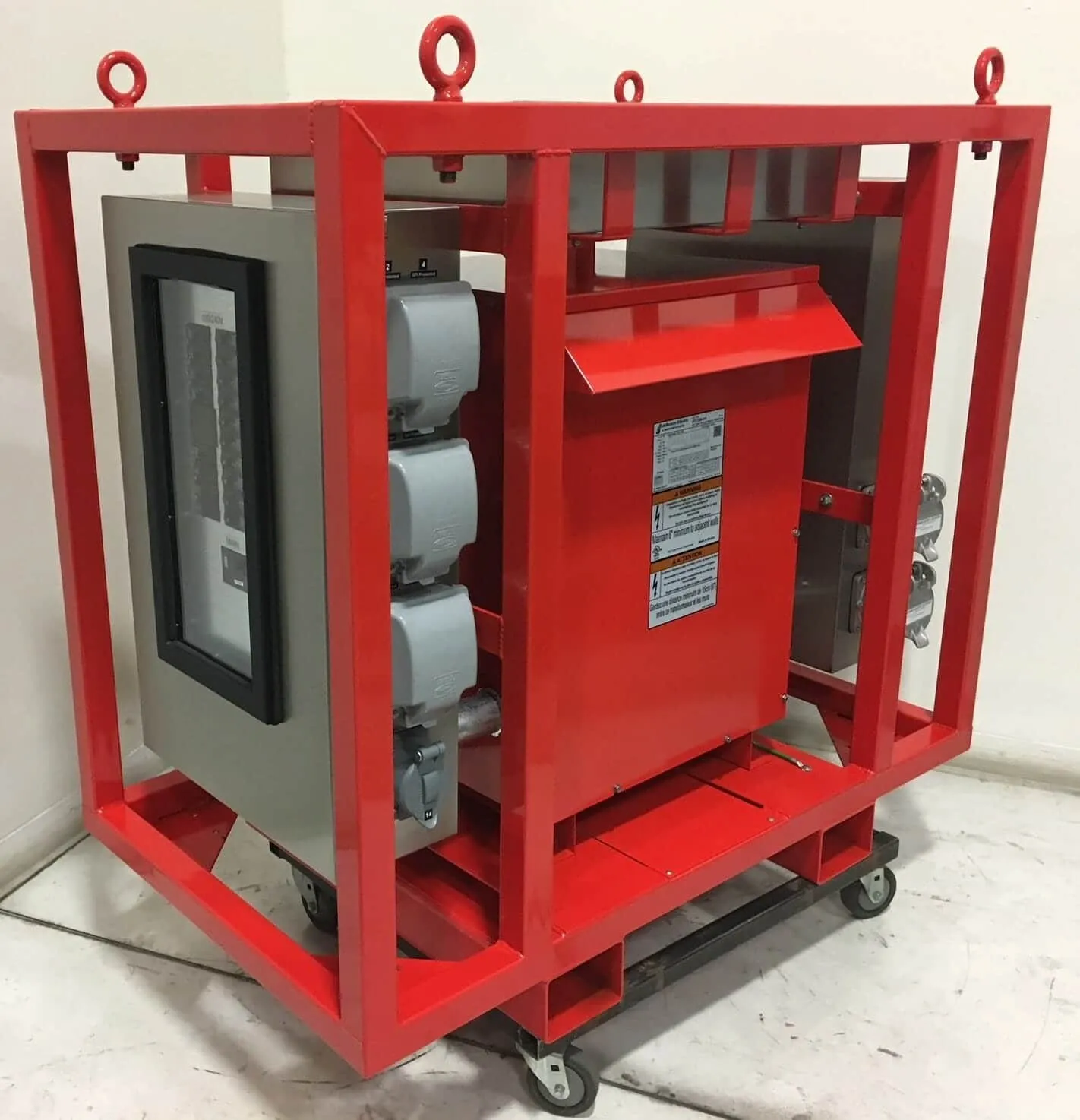
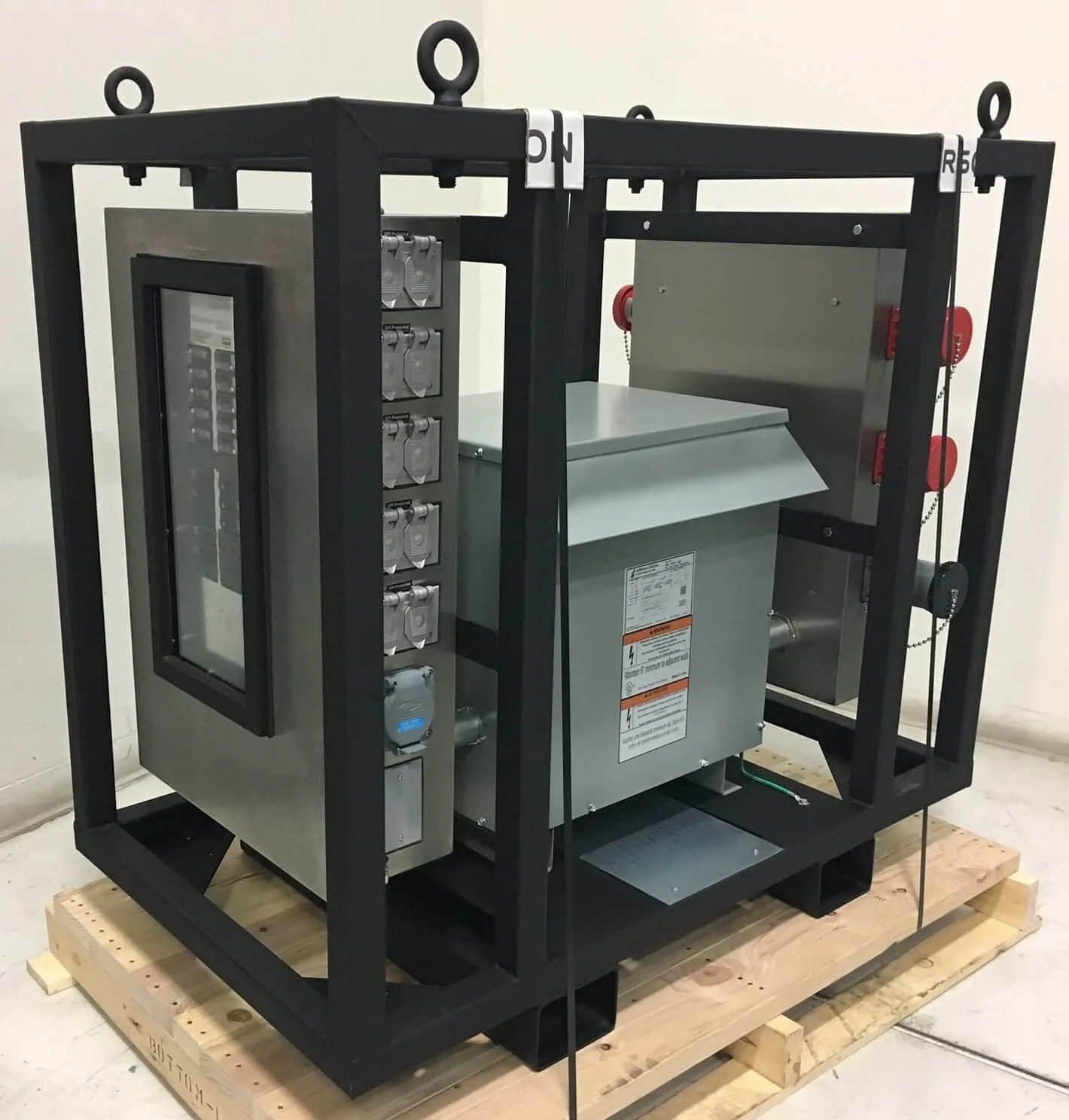
A transformer, breaker panel and GFCI-protected receptacles on a wheeled steel frame, so 600 / 480 VAC plant power becomes usable 240 / 208 / 120 VAC wherever the work moves next. Two-wheel carts for one person to handle; four-wheel carts where the transformer is heavier or the unit tows.
Documents
- Porta-Safe TPU'sPDF · 5.3 MBThe one-page overview: what a Porta-Safe unit is, configurations, and the standards designs are built to.
- Porta-Safe Cart Designer WorksheetPDF · 238 KBThe fillable specification form — input power, receptacles, enclosure and options. Fill it in online instead at /cart-designer/.
What is on the cart
- Primary input
- Fused disconnect or main circuit breaker; hard-wired, pin-and-sleeve plug, or Cam-Lok connectors for 400 A and 600 A feeds.
- Transformer
- Dry-type step-down transformer sized to the receptacle load you list — typically 15 to 150 kVA, with larger and smaller units built on request.
- Secondary panel
- Breaker-protected 240/208/120 VAC distribution behind a hinged door.
- Receptacles
- GFCI duplex and twist-lock receptacles for tools and lighting; pin-and-sleeve or twist-lock welding receptacles at primary voltage.
- Frame
- Welded steel with lifting eyes; enclosure rated for the location — NEMA 3R for outdoor use.
- Wheels and handling
- Two or four wheels, tow handle, optional cord storage.
Designs are built to the NEC and, where specified, listed to CSA or UL requirements. The unit's operation manual governs connection and testing.
Wheels or a skid?
Wheels when the unit follows the crew through the plant during an outage. A skid when it feeds one laydown area for the duration, or when it needs to be craned onto a structure or a deck. Many sites run both: a stationary unit as the local source, carts off it to the work.